Problem / Solution / Deliverables
Problem
Fast fashion produces 10% of global carbon emissions and accounts for 35% of microplastics in the ocean.
Solution
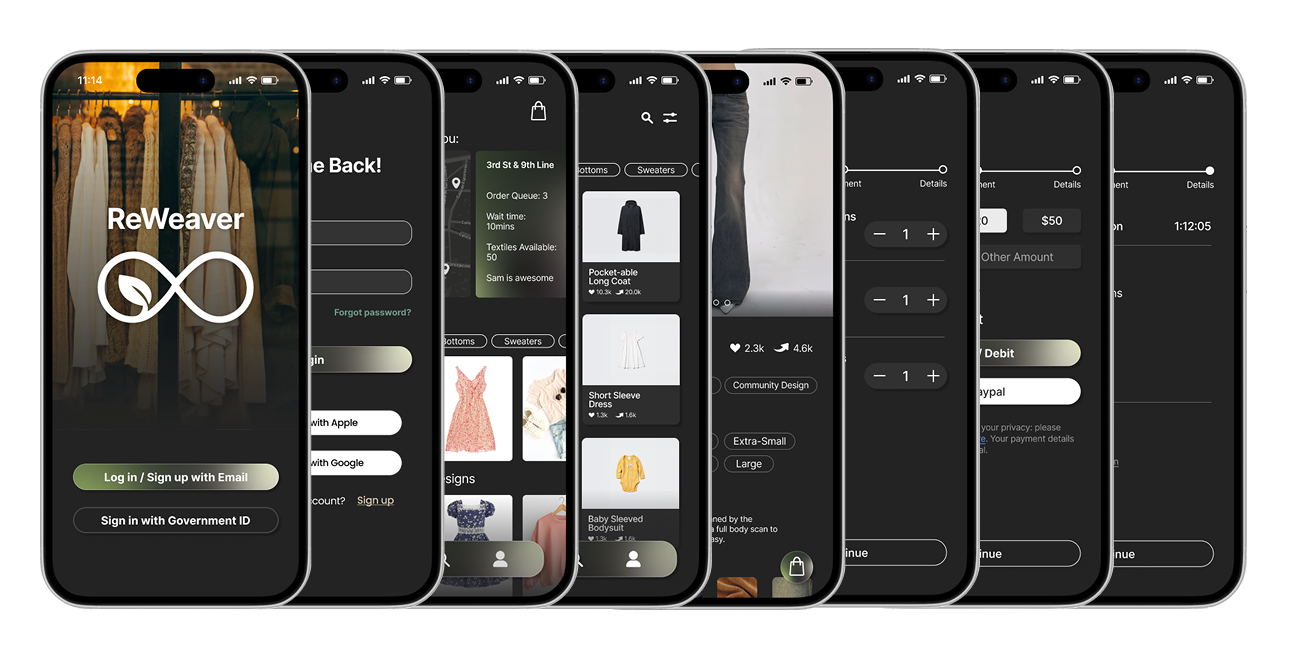
Designing a machine and a complimentary app to reverse the environmental impacts of the fashion industry.
Deliverables
App, Machine, Machine Touchscreen, Future Scenario Report.
Persona
Sky, 25 — Medical Student on a Tight Budget
Goal: Having more clothes that are fashionable yet affordable.
Frustration: Feeling left out because their friends are always following the latest fashion trends.
User Story: "I desire affordable, sustainable clothing options that reflect my identity, streamline my routine, and fit within my budget."
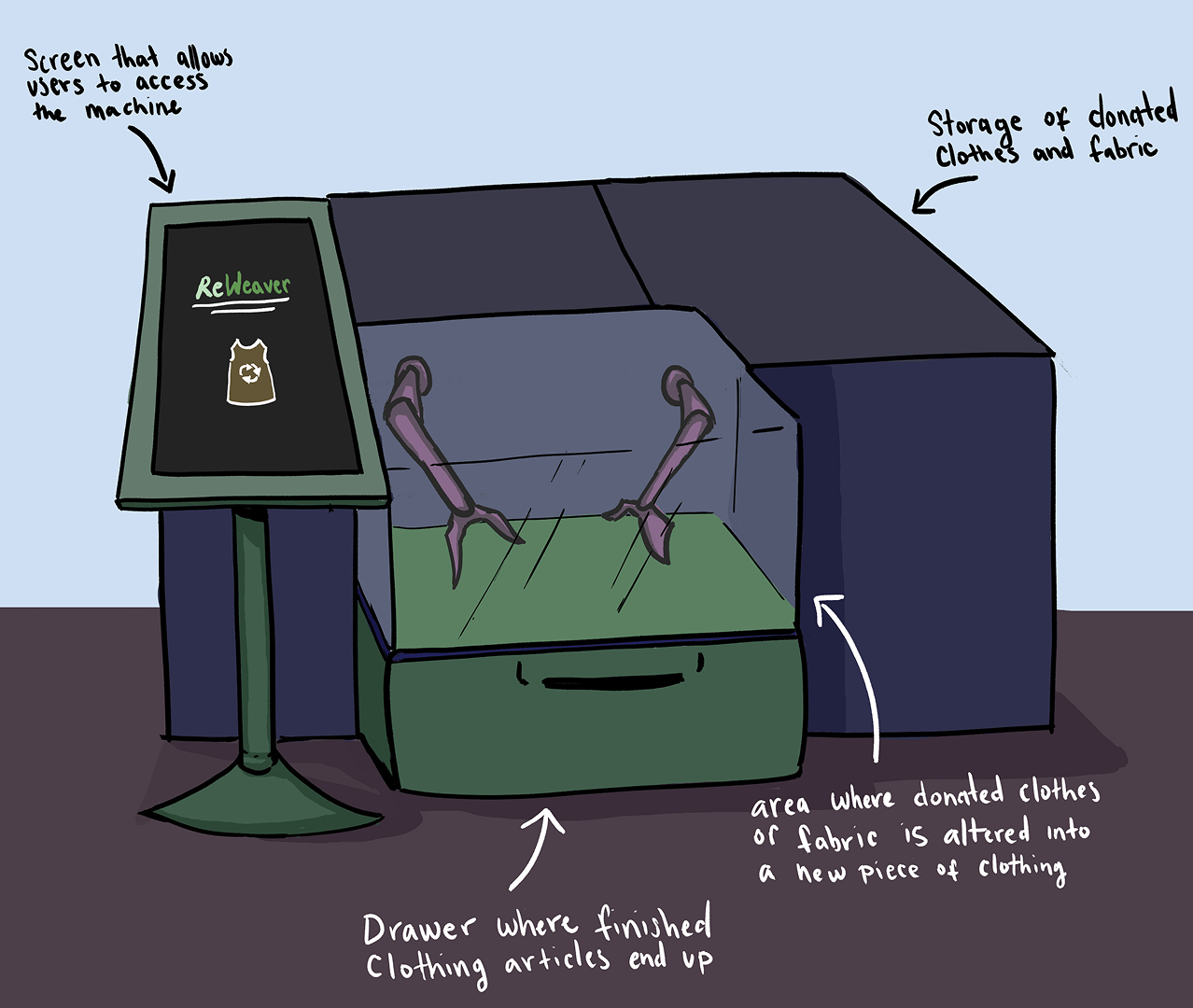
Machine Sketch
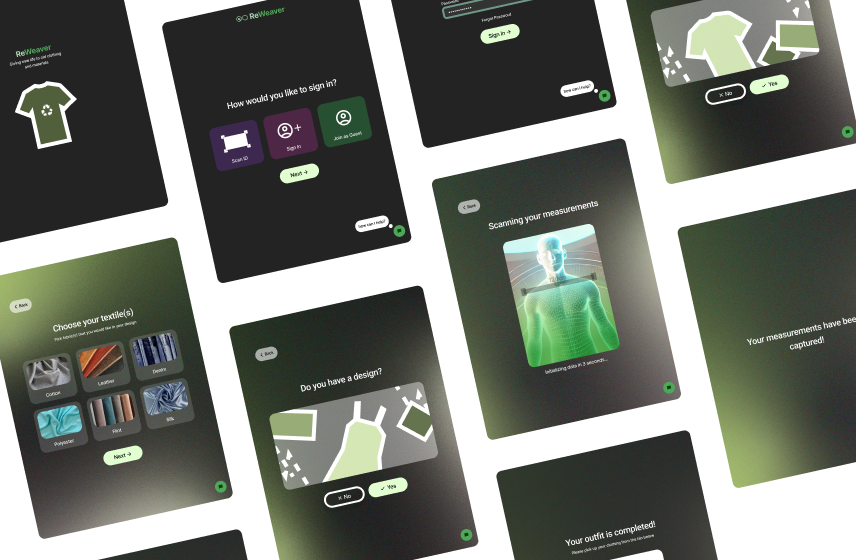
Mid-Fidelity Machine Screens
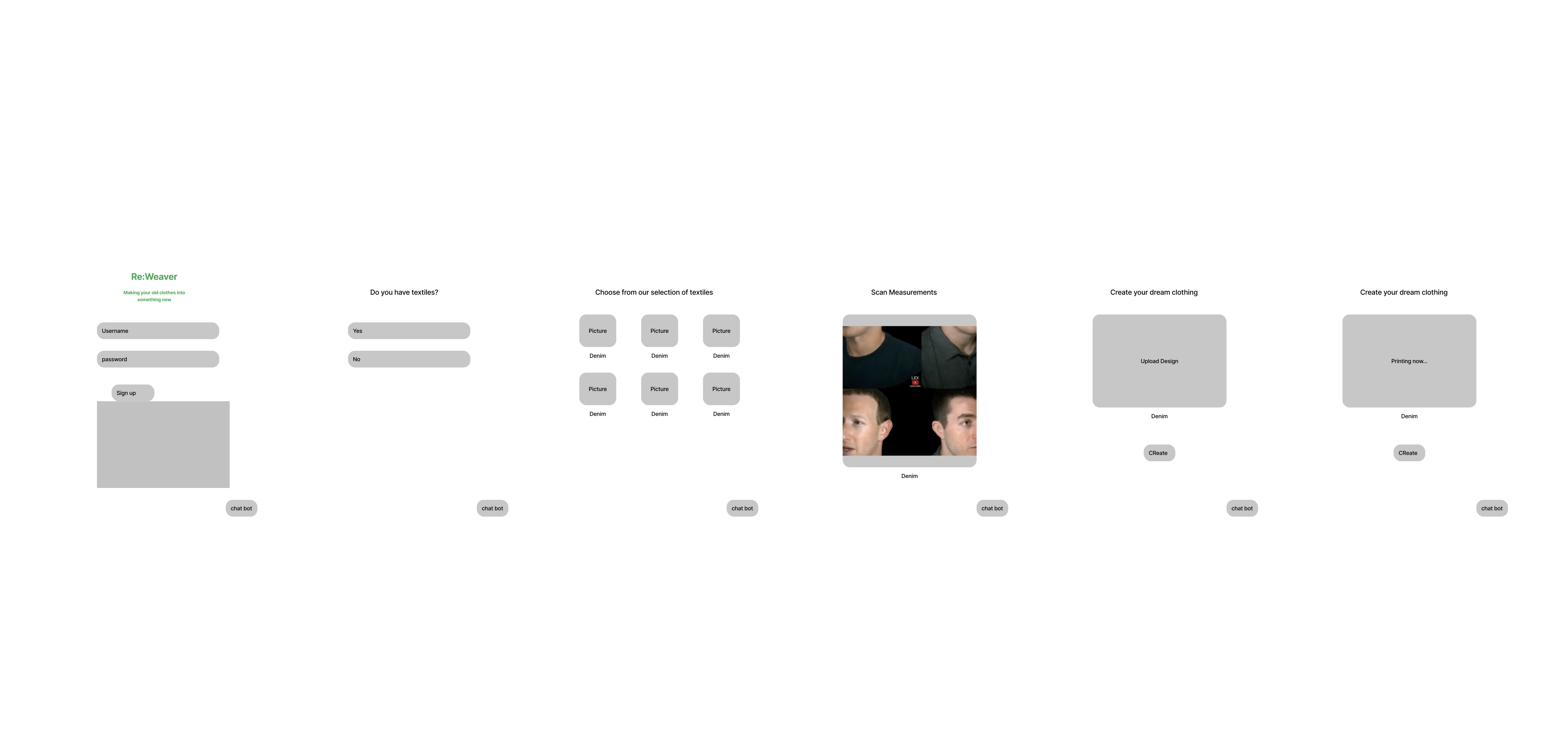
Final Machine Screens
App Features
Design Selection
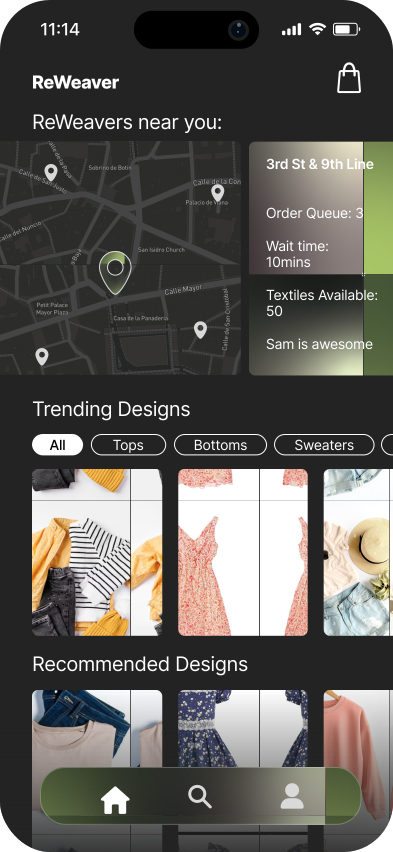
A clothing design selection feature is needed to give users control over how their revitalized garments look, ensuring the final result matches their personal style and increases satisfaction with the sustainable process.
Clothing Personalization
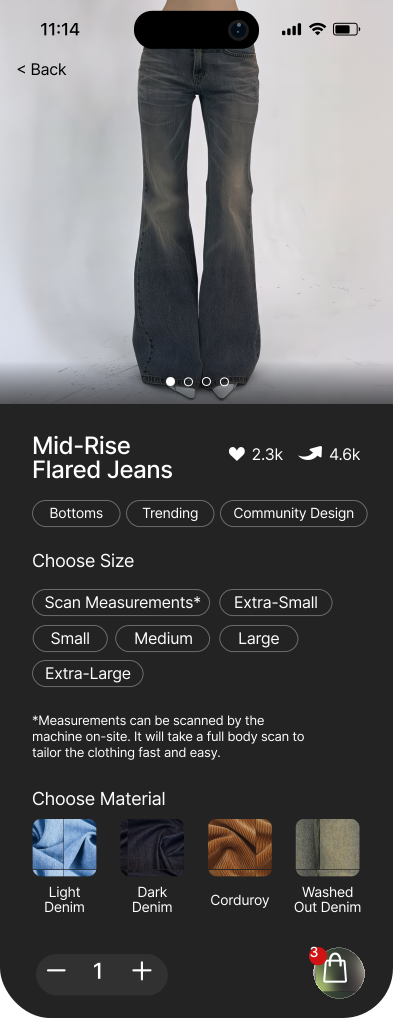
A clothing personalization feature is needed to help users tailor revitalized garments to their preferences, making the experience more meaningful and increasing their attachment to sustainable choices.
Final Prototype
Reflection & Impact
Creating an app and machine that revitalizes old clothes requires balancing sustainability with simplicity, ensuring the process feels intuitive rather than effortful.
The experience must clearly communicate value, helping users understand how their actions contribute to environmental impact while still delivering convenience and satisfaction.
Ultimately, thoughtful design can transform sustainable behaviour from a conscious obligation into a seamless, rewarding habit embedded in everyday life.